The product sheet
Photos, origin, ingredients or materials, weight, storage, how to use it.
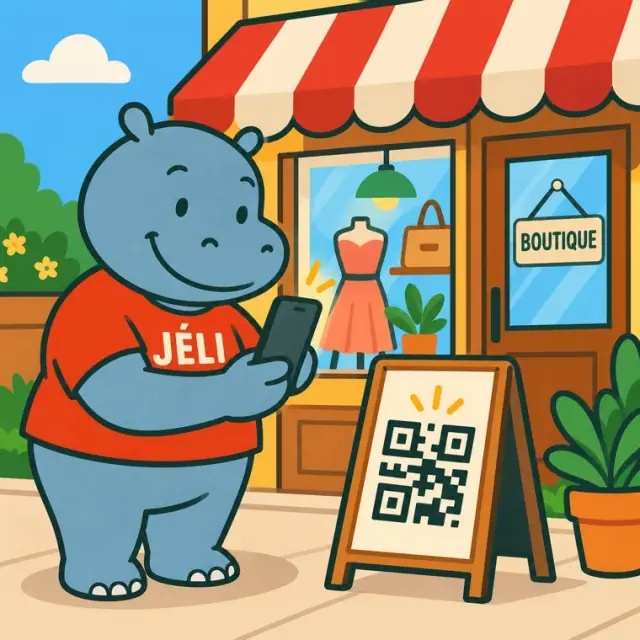
Producer, craftsperson, food processor, shopkeeper or online seller: a QR code on the packaging, the label, the stall or the shop window opens your product's JeliCard, with your voice, your prices and your contact for orders.
People look at a product for a few seconds. The label can't say everything, and once they are home, they no longer know where to buy it again.
Swipe to see the examples.
Photos, origin, ingredients or materials, weight, storage, how to use it.
Your story, your workshop or your field, a voice message in your languages.
Your other products, sorted in the same folder: sizes, prices, current offers.
Your WhatsApp link and your number, written in the text: one tap is enough to order. Payment, delivery, where to buy.
Recipes, photos and voice messages from happy people, which you add.
A JeliCard is shared in one move: by text message, on social media, by email, on the internet, or simply by scanning the QR code from one phone to another. Your message travels across time and distance, and reaches every audience, here and elsewhere.
These tools are excellent, and you probably use them already. Jèli does not replace them: it does a different job.
Instagram and TikTok help people discover your products, and WhatsApp is for taking orders. Jèli is on the product itself: the person holding your jar, your bag or your fabric scans it and finds the product sheet, the prices and your contact to reorder, even if they don't follow you on social media.
It's not one or the other. Put the links to your Instagram, TikTok and WhatsApp accounts in the text of your JeliCard, and share your JeliCard on your networks: each tool does what it does best.
Start with your best-selling product.
The label gives the product's name. The JeliCard tells its story and makes people want to come back.
Your first JeliCard is ready in a few minutes.